Dreaming the Marsh
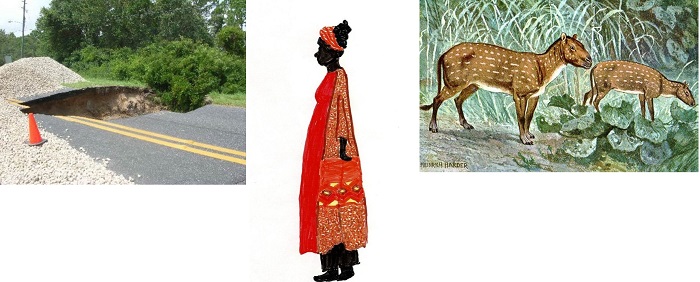
Eco-fiction infused with magic realism, featuring a giant sinkhole, a lovesick geologist, twin sister real estate developers, battling county commissioners and a coffee-shop owner with mystical gifts, as well as visits from the Ancients, magic writing on the wall, and two romances.
AND NOW IT’S AN AUDIOBOOK!
What They’re Saying
“Exuberant, melodic and vigorous prose underpin this story of a sinkhole’s destructive and formative effects on the community nearby. From the sudden collapse of the literal ground under their feet to the dissolving of emotional facades and revelation of hidden motives, McCulloch deftly chronicles the transformed lives in a small Florida town.” Sandra Gail Lambert, Lambda Award- winning author of My Withered Legs
“In this lively and entertaining debut, the hapless characters struggle to understand the curious magic that is destroying their land and their dreams. Elizabeth McCulloch shares with us her own deep love of our fragile planet and lays out the consequences of our inadequate frame of reference for viewing the universe and its mysteries.” Pat Spears, author of Hotel Impala
Questions and Answers
Is your fiction based on your life?
No. What I value is making stuff up, especially creating characters and trying to enter the minds and hearts of people who are very different from me. In the course of writing my fourth, yet-to-be-completed novel, I wrote about 70,000 words, from the point of view of someone very like me, and to my dismay I found I didn’t like her! She is now a fairly minor character in the book – her mother and father are the central figures.
How did you come to write the book?
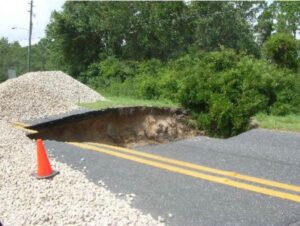
It’s very odd that Dreaming the Marsh was my first novel. My obsession is not with the environment, but with children and poor people and injustice, yet I have described this book as an environmental fable. I don’t believe in the slightest in magic, yet magic infuses the book, and completely delights me. The book began with an image of a sinkhole swallowing a house, and an odd verse which came to me, and which I didn’t particularly understand. It all grew (magically!) from that.
Did you do any research for Dreaming the Marsh?
I researched Payne’s Prairie, sinkholes, indigenous Florida tribes, and prehistoric fossils. It was fun and fascinating. The magic in the book came solely from my imagination, and surprised me.
Do you consider yourself an environmentalist?
I think I’m a little like Tyler in Dreaming the Marsh, who studied the earth because he loved it and knew it was dying. I am not at all optimistic; you might even say I’ve lost all hope. It’s certainly not just climate change. It’s the poisons and clutter we have inflicted on this magnificent rock we call home, which we have occupied for about 300,000 years. We are terribly intelligent and perilously unwise. Like Charlotte in Seeing the Edge, a not-yet-published novel, I find comfort in our cosmic insignificance. We are tiny specks in a huge universe, human life occupying only the smallest fraction of a second of eternal time. We don’t matter.

Of course, we DO matter to us, and we matter to me. I grieve for my grandchildren, for all the people to come. I think dystopia, not utopia, lies ahead: poison and disease, droughts and desperate migrations, social unrest followed by cruel tyranny. I certainly hope we don’t, in all our idiot hubris, travel into space to colonize and poison yet another world.
That is my cosmic view, and it’s unremittingly grim. But each of us is here for only a brief while. Why should we not make that while as rich and jubilant as possible? For me, that means trying to be good and kind, learning and creating, rejoicing in the beauty and marvels of the natural world. Not to mention cooking, eating, singing and dancing.

One part of being good is to avoid contributing to the destruction of our and many other species. I am imperfect and far from thorough in this. I compost, and recycle what I can in the bins my city provides. I use cloth napkins, and get a kick out of buying a Round-up sprayer and filling it with Dr Bonners soap and Tabasco instead of pesticides to get rid of mites on my orange tree. But I’m daunted by coral ardisia and camphor trees, don’t see how I can manage the labor of eliminating these invasive species from my yard. I was horrified to read for the first time that Boston fern is also invasive – I have huge crops of this under the hedge and at the edge of the woods. At least it pulls up easily. 
We keep the thermostat at 68 in winter and 80 in summer, but we use paper towels and household poisons, and we waste water. I’m glad my city has banned plastic bags, because I’m always forgetting my tote bags, even when I keep them in the car. I could go on with a long list of my environmental sins – I travel as often as I can, eat food that has traveled from afar. I suppose my greatest sin is that I am part of the greediest country in the world, consuming way beyond our needs. With five percent of the world’s population we use twenty-five percent of the energy, and generate fifty percent of its solid waste.
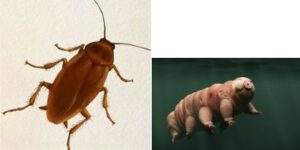
As such an environmental pessimist, where does my hope lie? It lies in evolution. Were I around in 500 years I think I would find myself the only surviving human, and all the tigers, bees, frogs and lobsters would be gone. It’s unbearable even to write that – I love us, and the other species whose habitat we are ruining. But just as Tyler sees green shoots rising in the rubble of the sinkhole, I believe we will not destroy all life on earth, or make earth uninhabitable. From the cockroach or tardigrade or some green shoot, in many millions of years evolution will create a strange new world as varied and rich as our own.
The Year of the Child
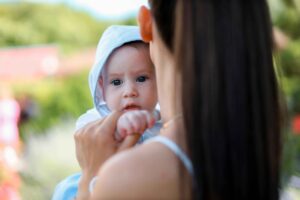
Fifteen-year-old Leanne Ellsworth, coerced by her abusive boyfriend, abandons her baby, Misty Dawn, then struggles to get her back and raise her. Marybeth Coggins finds the baby on her doorstep and tries to help, hoping to do better with Leanne than she did with her own daughter. Leanne’s mother Vinnie raised three challenging children; now Leanne has returned with her baby.
What They’re Saying
“Leanne’s story is not, or not only, a simple coming of age story. It is, in McCulloch’s capable and experienced hands, a very realistic and revealing journey into what it is to be a poor female child, uneducated and with very limited resources, in today’s America. You will remember Leanne. And you will see her again. She lives in your town.” Rhonda Riley, author of The Enchanted Life of Adam Hope
“A captivating novel – gripping, suspenseful, with remarkable insight into the mind and world of a teenge mother living in poverty…I was swept right into Leanne’s world, anguishing at her mistakes and cheering as she kept struggling to make a life for herself and her bay.” Nancy Hayes Kilgore, bestselling author of Bitter Mag
Questions and Answers
Is the Year of the Child based on your own life?
No, but it draws on my knowledge about adoption and juvenile court proceedings, and my exposure as a legal aid lawyer to bureaucracy, the welfare system for single parents, and the struggles of low-income people. I was myself a single mother for 18 years, a guardian ad litem, and a foster mother.
Where did the idea for the story come from?
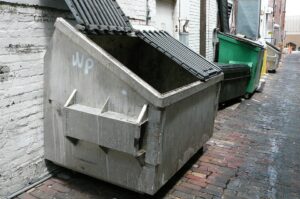
I passed a dumpster behind the grocery store, and imagined a baby left inside. The book grew from that. I’m always happy when a vivid image becomes a whole story.
Did you do any research for the book?
I checked up on some of the rules for welfare and juvenile dependency, but felt free to stretch or break them, as happens in real life.