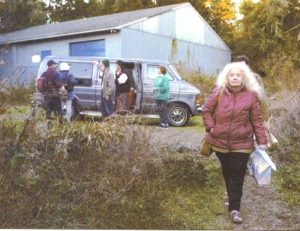
Arupa Freeman died December 23, 2019. Led by her husband Bob, we kept the H.O.M.E Van food pantry going at their house until his sudden death May 31, 2020. Without Arupa or Bob or their house, which was H.O.M.E. Van Central, the few remaining volunteers – Marie, Reggie, Pat, Liz, Shmal – were unable to continue the work. Bob told me that Arupa had asked that I be her “literary executor.” This page will hold her writings – essays and poetry – about the people and work she loved. She didn’t just write about homeless – she wrote about nature and fun and people and her childhood – everything under the sun. I had thought to finish the page in a year or so, but too many other projects came along, including a new outreach van, run by Grace Marketplace, where I get to volunteer most weeks. So now I will add Arupa’s writings here bit by bit, as I am able. (Unless otherwise noted, all writings by Arupa)
ANOTHER GIFT FROM ARUPA:
One year later, “the homeless,”
discussed like a herd of unruly cows,
to be moved to a new pasture,
for municipal convenience,
scatter across our less-blinded vision
until we see
Opie 12-stepping through the woods,
Otis, silent, like a Sufi saint,
Marcus, who loves sardines,
Arthur cursing the government,
Candy raising rats in her car,
Eric studying beetles in the woods,
Ellen taking a bath out of a plastic pail,
George, whose clothes always look like they’ve
just been ironed,
Jerry, the leader of his tribe,
Charlie, of tattered magnificence,
Pete, his new hat decorated with feathers and
Spanish moss,
Bulldog and Blaze propping each other up
while they enjoy a concert in the park,
Denise and Victoria sleeping in their car on winter nights,
Charles yelling, “I want a pen and notebook. Do you
think I’m stupid?”
Renatta eating canned fruit,
Donna in her scarlet dress dancing on the downtown plaza,
Ed tipping his hat as he says,
“Pray for me. I need a miracle.”
Robert the vegan refusing new shoes
because he’s finally found a job –
for all these, not cows, people,
and many more,
Creator we thank you,
as we find our souls waiting for us
along the path to South Camp,
just off Williston Road,
standing in Lynch Park,
patiently wanting to help us
find our way home.
1
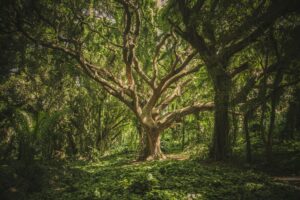
May my body be
An old tree
Inscribed by rain, one rumpled breast held high
To feel the sun,
One low, to nurse
The landscape of the earth,
Sienna rose of evening time.
2.
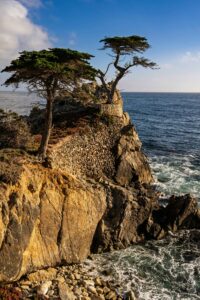
May I grow old
With the cypress
By the ocean.
May I be rocked
By the waves,
While my sparse hairs
Dance and gossip with the wind.
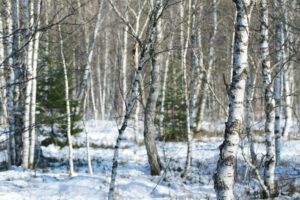
3.
May I be the silver birch, may I stand throuth the winter,
May I reflect ight,
May my desires be written
In black lace calligraphy on white parchment,
May the universe rejoice
In my beauty.
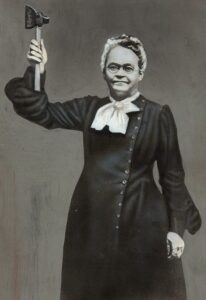
Carrie Nation returns from heaven carrying a hatchet
Women, don’t be afraid.
Where I come from they don’t
let me use this anymore.
Down here on Earth I used it
because it was all I had.
My baby had a big hole eaten
away in the side of her face.
Her jaw was locked and I had to
feed her soup through a metal tube
forced between her teeth.
Her father was dead from drink.
I ran a boardinghouse to keep us alive.
We lived like dogs.
But that’s how it was for women,
back then.
It was supposed to be agin’ the law
To sell booze in the state of Kansas,
But men were the law!
Always had been.
Guess they still are.
There was booze flowing free from every
drugstore and back alley joint in
Wichita, Topeka, Medicine Springs –
everywhere!
Men stayed drunk day in and day out,
year round –
who could drink and plunder most was
the biggest man.
Women and kids were starving and
there wasn’t one damned thing we could
do about it.
But I did something, women.
I did something!
I took this hatchet and I destroyed
saloons all across the
United States of America.
I’d break all the bottles of whiskey,
chop up the kegs of beer.
Send all the men flying into corners,
hopin’ to escape with their lives.
Women didn’t have no lives to escape with.
We watched our babies die,
we scrubbed floors and sold eggs for a
few nickels to buy cornmeal and paregoric.
It still breaks my heart to remember how it was.
They laughed at me.
I went down in history as the crazy,
unsexed, man-hating lunatic with the axe,
but I never stopped fighting.
My last words were,
“I have done what I could.”
They put those words on my gravestone:
Carry A. Nation
Faithful to the cause of
Prohibition,
“She hath done what she could.”
What are they going to write on your gravestones?
Her children had perfect teeth?
She kept her bills paid?
She finally lost that twenty pounds?
She didn’t make no waves?
The men have left off their drinkin’
and now they’re busy destroying the
Whole world and everybody in it:
Cuttin’ down all the trees,
poisoning the ocean,
killing all the animals,
tearin’ big holes in the sky!
and you women are still cookin’ their food,
lying in their beds,
workin’ for ’em,
helpin’ them do it!
Are you crazy?
They said I was crazy.
You, you want your children to go to the
best schools.
Can’t you see there ain’t going to
be no schools, good or bad,
Unless you get up off your
Powdered butt and do something!
I’ve said my piece,
I ain’t going to say no more,
I am going to leave you my hatchet
so you’ll remember my words,
and know that this was not a dream.
I remember this world.
It’s up to you, women,
whether it gets to go on,
whether there’ll still be
children playing in the sun,
fish and birds,
wheat and corn growing in the
state of Kansas.

Christmas in Prunewhip, Vermont
Prunewhip, Vermont winters in the 1950s looked exactly like all the corny TV Christmas movies and Hallmark cards you’ve ever seen. Some years we
would have an ice storm and every tree, down tothe smallest twig, would be coated with ice that sparkled and shimmered in the obscure December sun. Every garbage pail was covered with snow and wore a white Santa cap. Each run down house was blanketed in snow and had a magical fringe of icicles around its roof. All mundane or shabby realities were transformed into fairy tale sculptures of ice and snow.
In mid-December school let out for two weeks and kids played outside from dawn to dusk. Some days there would be neighborhood snowball fights, one side of the street against the other side. The combatants met in a vacant lot where each army had erected a fort of packed snow and stockpiled snowballs behind it. When the cap gun sounded,everyone started firing.
After the first freeze the fire department flooded asunken meadow and that was our skating rink. The best game there was called Crack the Whip. All the kids held hands, in order of height, and skated in a circle, faster and faster and faster until the tall kid at the top of the line shouted “All drop hands!” If you were the shortest kid, you knew you might land in a snow bank in the next county and have to walk home, but that was the thrilll of it.
Everyone looked forward to Christmas caroling with their Brownie Scout troop or Sunday School class. Not only did you get hot chocolate and homemade cookies at every stop, but you also got to see your school teachers in their living rooms looking like real human beings.Another big event was the annual School Christmas pageant. There was no separation of Church and State in Vermont at this time. We had a fair number of Jewish kids, whose parents taught at the local college, and they schemed and struggled right alongside their Christian pals to try to get a role that involved wearing a costume, as opposed to having to sit on the bleachers in civilian clothes and sing “OLittle Town of Bethlehem” along with the talentless herd of ordinary kids.
Few of us aspired to being cast as Mary or Joseph. That would be like expecting the lead role in a Broadway play. We all knew Joseph would be a star basketball player and Mary would be the most slender, delicate, socially well-placed, and beautiful brunette in school (blondes were automatically banned from playing Mary). You could hope to be a shepherd. a wise man or an angel. I had blonde curls, so that made me a frontrunner in the Angel competition. One year I actually got to float out on stage and say, “Fear not:for, behold, I bring you good tidings of great joy, which shall be to all people….”
Merry Christmas from Bob and Arupa, and blessed be the moments of beauty and joy, for they will be with us forever.

Seasonal poem
Peace, may we have peace
Republicans, Democrats,
Black, white, Chinese,
Vegans, locivores,
folks selling barbecue
From backs of trucks on country roads.
May we have compassion,
For doctors and dentists and hookers,
And chief financial officers,
For gated communities and homeless shelters,
For law enforcement officers, for thieves,
For all who breathe the free air around us,
For all who feel the sun and rain on their weary backs.
May there be candles,
Menorah candles,
Kwanza candles,
Christmas candles,
Candles adding their soft light
To the gentle beams of the Solstice moon.
May there be light,
May there be peace,
May we love one another.
image: paper cutout by Artem Podrez at pexels.com